
Your Board Shouldn’t Come in One Shade
Earned: Thought-Leadership Op-Ed
Your Board Shouldn’t Come in One Shade
By Tarang Amin, chairman and CEO of e.l.f. Beauty
Two years ago, my company ran an ad campaign around Wall Street with a name that was hard to ignore: “So Many Dicks.” The idea behind it was a simple count. On U.S. public company boards, there were 566 men named Richard, Rick or Dick, and only 283 Hispanic women (e.l.f. Beauty, 2024). We wanted people to laugh first and then feel a little uncomfortable. Today, many companies seem to have decided the whole topic is too uncomfortable to talk about at all.
As the Associated Press (2025) reported, many major U.S. companies have scaled back or dropped their diversity, equity and inclusion programs under growing political and legal pressure. The latest numbers on women’s board appointments are also worrying. According to Spencer Stuart (2026), women made up 29% of new S&P 500 directors this year, down from 38% in 2025. Black Enterprise reported that women’s share of Russell 3000 board seats fell year over year for the first time in more than a decade (Hill, 2026).
I understand the pressure. Nobody wants a lawsuit, and no CEO wants to find their company trending online for the wrong reasons. But I believe many of my peers are making a business mistake and calling it a safe choice.
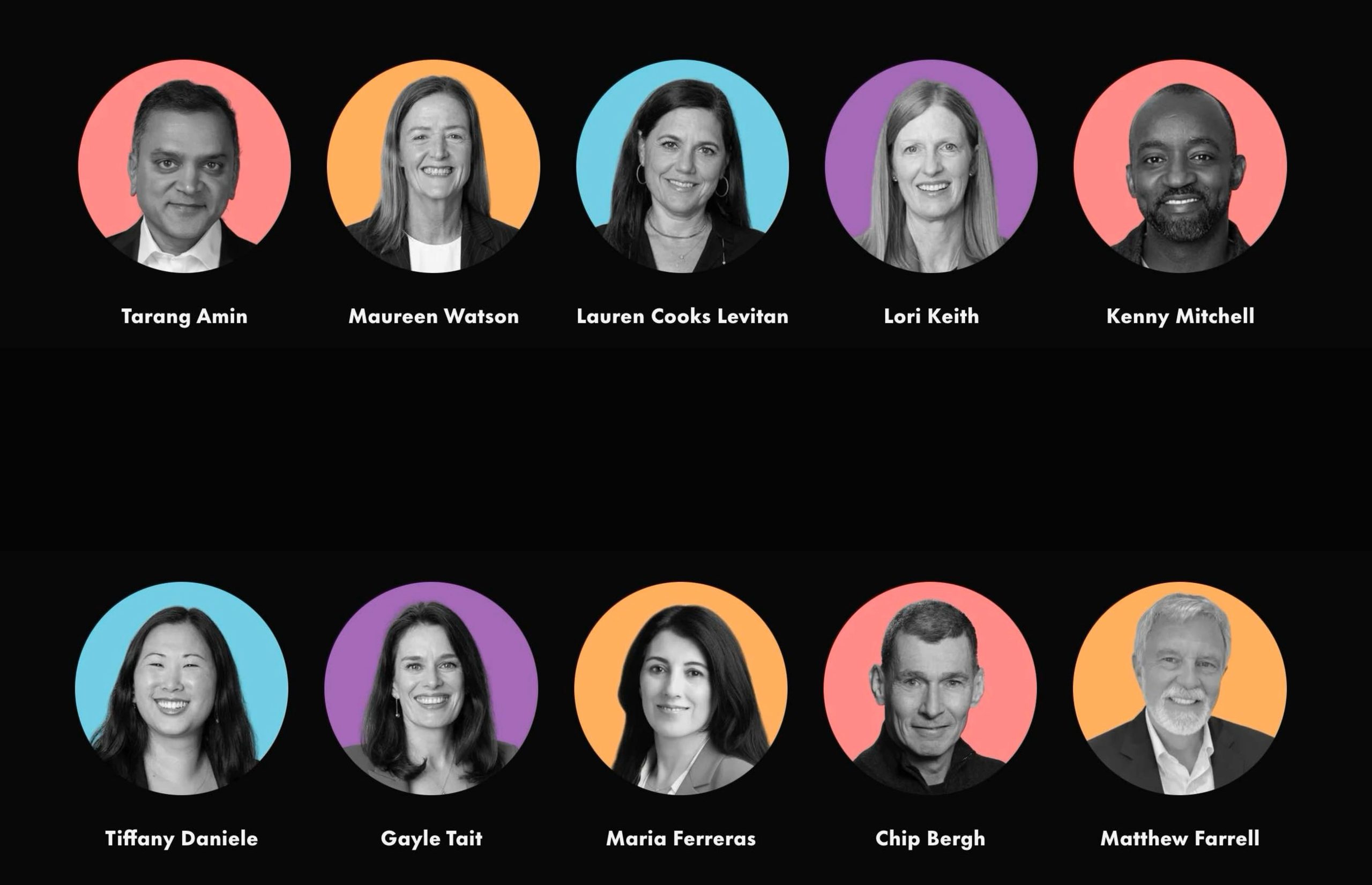
At e.l.f. Beauty, at least 60% of our directors are women and at least 40% come from diverse backgrounds. That puts us among fewer than 1% of about 3,700 U.S. public companies (e.l.f. Beauty, 2026a). I expect our directors to question my assumptions about our customers, our growth plans and our risks. As I’ve said before, a board with different backgrounds brings more viewpoints into the room, and that leads to better decisions (e.l.f. Beauty, 2024). In the beauty business, assuming one perspective covers every customer is a bit like making one foundation shade and calling it “universal.”
To be fair, I can’t say exactly how much our board has contributed to our results. No CEO can draw a straight line from one board seat to one quarter of growth. What I can say is that we just reported our 30th consecutive quarter of net sales growth (e.l.f. Beauty, 2026b). At the very least, our experience shows that a diverse board and steady growth can sit at the same table.
Some people worry that focusing on diversity means lowering the bar. I’d argue the bigger problem is how narrow the search often is. This year, 37% of new S&P 500 directors are current or former CEOs (Spencer Stuart, 2026). CEO experience is valuable, but boards that look mainly at CEOs can miss strong leaders in finance, technology or operations. A wider search can help boards find more candidates who meet the same standards.
Whatever the political climate, directors still have a job to do: understand the business, challenge management and oversee risk. Smart investors don’t put everything into one stock. Smart boards shouldn’t fill every seat from one flock.
So here is my request to other CEOs and board chairs: don’t walk away from the promises you made a few years ago. Start with the skills your board needs, then ask recruiters to look for qualified candidates outside the usual networks. Through Change the Board Game, we support the Accelerate program with the National Association of Corporate Directors, which prepares executives to serve on boards. More than half of its graduates now sit on boards (e.l.f. Beauty, 2026a).
Two years ago, we counted the Richards. If your next board search starts and ends with the same old contact list, don’t be surprised when the count comes out the same.
Tarang Amin is chairman and CEO of e.l.f. Beauty.
Strategy Note
This op-ed is written for The Wall Street Journal, because its readers include CEOs, board members and investors, the people who decide who sits on corporate boards. The topic is board diversity, which is part of governance. e.l.f. has worked on this for years through its own board and its Change the Board Game program. Right now, many companies are going quiet on DEI. So when a CEO keeps talking about it, people are more likely to notice.
The piece starts with e.l.f.’s 2024 “So Many Dicks” campaign and comes back to it at the end. The witty tone is also similar to that campaign, so it sounds like e.l.f. and its CEO. The headline uses the word “shade,” which every beauty customer knows, to link board diversity to the beauty industry.
The article talks about board diversity as a business and governance choice, not a political one, and it does not attack any political figure. It also answers the worry that diversity means lower standards. It admits that no one can fully prove that a diverse board leads to growth, which makes the argument more honest. It also gives other companies a simple first step they can take. Finally, it does not promote any products, so it reads like a real opinion piece instead of an ad.
DISCLAIMER:
This page and its content are not affiliated with e.l.f. Beauty. All content was created as spec public relations and advertising for educational purposes as part of a class assignment and makes no claims on behalf of the brand. This op-ed was written as a class exercise and does not reflect the real views of Tarang Amin. Photo: e.l.f. Beauty Board of Directors, from elfbeauty.com.